
How to Exchange BTC for LTC: A Two-Pass Pre-Transaction Safety Check

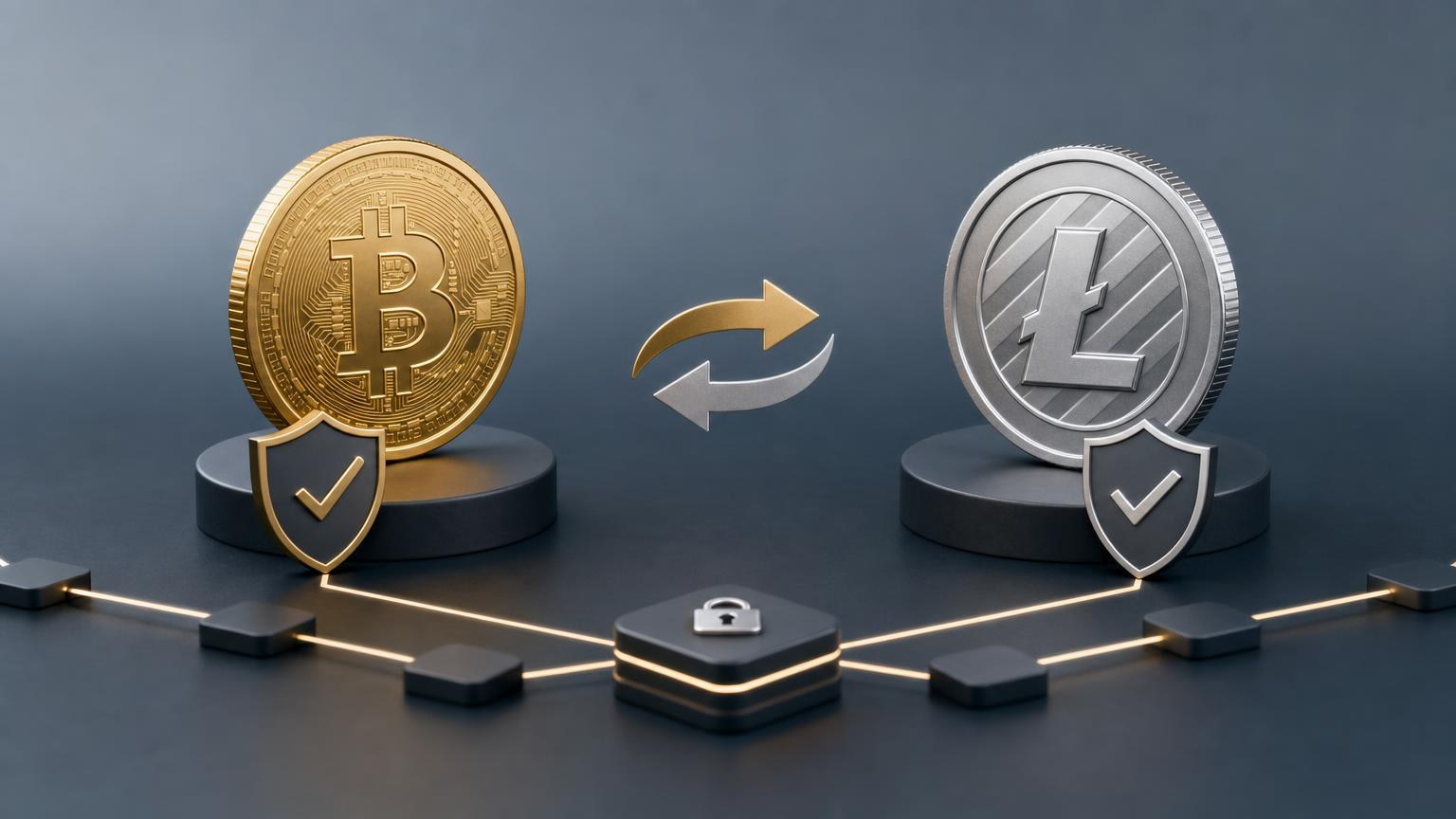
Before exchanging Bitcoin for Litecoin, verify the operation twice: once before creating the order and again immediately before sending BTC. The first pass tests whether the exchange context is coherent. The second catches address substitution, changed amounts, expired terms, and other last-minute discrepancies before an action that may be difficult or impossible to reverse.
This checklist reduces avoidable errors, but it cannot remove volatility, compliance, counterparty, network, or cybersecurity risk. A matching set of fields means only that the review can continue; it is not a guarantee of safety, completion, or a particular outcome.
Rapid stop-signal check
Do not create or fund the order if any of these conditions appears:
- The site was opened through an unsolicited message, advertisement, shortened link, or support account that contacted you first.
- The order asks you to send an asset other than BTC, while the stated direction is BTC to LTC.
- The displayed deposit network is not the Bitcoin network expected by your sending wallet.
- The receiving address is not accepted as a Litecoin destination by the wallet or platform that will receive the LTC.
- The deposit address changes after you copy it, without a clearly explained reason and a new order confirmation.
- The service asks for a seed phrase, private key, remote access to your device, or wallet recovery file.
- The amount due, estimated amount to receive, applicable costs, or order conditions are absent or change without explanation.
- Someone ties the exchange to guaranteed profit, risk-free returns, or an urgent “limited opportunity.” Regulators warn that guaranteed cryptocurrency returns are a common scam indicator. [1]
If none of these signals is present, continue to the full review rather than treating the quick check as approval.
How to classify the result
- Continue checking: the independently obtained information matches the order, but the second pass and wallet confirmation are still required.
- Clarification required: a field is missing, ambiguous, unsupported by your wallet, or different across two screens. Do not fund the order until the discrepancy is resolved through the service’s official channel.
- Stop: the domain is suspicious, the asset or network is wrong, the address changed unexpectedly, secrets are requested, or the transaction is connected to pressure or guaranteed-return claims.
Pass one: verify the exchange context before creating an order
1. Site identity and domain
What to verify: Check the domain character by character, including spelling and the top-level domain. Confirm that the connection is encrypted, but do not rely on the padlock alone: phishing sites can also use encrypted connections.
Independent confirmation: Open the service from a trusted bookmark or a domain recorded during an earlier verified interaction, rather than from a direct message or search advertisement. Compare the domain shown in the browser with the domain published through an official communication channel you reached independently.
What a discrepancy means: A substituted letter, unexpected subdomain, redirect, or different domain is a stop signal. Do not sign in, connect a wallet, or send funds. Phishing commonly uses messages and deceptive links to make a false page appear legitimate. [2]
2. Exchange direction and assets
What to verify: The order must state that you send BTC and receive LTC. Check the asset ticker and full name together; interface icons and familiar colors are not sufficient confirmation.
Independent confirmation: Compare the order with your sending wallet, which must show a Bitcoin balance, and your receiving wallet or account, which must support Litecoin deposits. The service works with BTC and LTC, among other supported assets, but the availability of a specific pair or direction should be confirmed when the order is created.
What a discrepancy means: If the order requests another asset, reverses the direction, or shows a pair that is currently unavailable, clarification is required. Do not substitute another asset or network merely because its name looks similar.
3. Deposit and receiving networks
What to verify: For a standard BTC-to-LTC exchange, the outgoing transfer is BTC to the order’s Bitcoin deposit address, while the payout goes to the LTC address you supplied. Verify every network label shown by the service and both wallets. Do not assume that a ticker alone identifies a network, especially when a wallet also supports tokenized or bridged versions of assets.
Independent confirmation: Use the network information displayed by the sending wallet for the BTC withdrawal and by the receiving wallet for the LTC deposit. If either side offers several network choices, consult that wallet or platform’s official deposit documentation before proceeding.
What a discrepancy means: A network mismatch is a stop signal. An address being accepted by an interface does not prove that the service can credit a transfer made through that route. Sending through an unsupported network can make recovery technically difficult or impossible.
4. Amount, costs, and expected LTC
What to verify: Record the BTC amount to be sent, any displayed service or network costs, and the estimated or fixed LTC amount to be received. Note whether the terms can change before payment, whether an order can expire, and how the service handles an underpayment or overpayment.
Independent confirmation: Compare the order with the final confirmation screen in your BTC wallet. For general plausibility, compare the quoted conversion with an independent market reference, while recognizing that a market price is not the same as an executable exchange quote and may exclude costs.
What a discrepancy means: A small difference may reflect stated costs or a clearly disclosed pricing method. An unexplained difference, a missing total, or a material change requires clarification. Cryptocurrency prices can move during the process, so an estimate should not be treated as a guaranteed payout unless the order explicitly defines how and for how long its terms are fixed.
5. Limits, verification, and eligibility
What to verify: Check whether the amount falls within the currently displayed limits and whether additional information may be required for this direction. Verification requirements can depend on the operation and the results of compliance checks.
Independent confirmation: Use the current order interface and the service’s official terms reached from the verified domain. Also consider whether the transaction is permitted under the rules applicable in your country and by the wallet or platform you use.
What a discrepancy means: If the interface, terms, or support response gives conflicting requirements, do not create multiple orders or split the transfer to avoid a check. Pause and obtain clarification. This checklist does not replace legal or tax guidance, and rules differ across jurisdictions.
6. Source and freshness of the information
What to verify: Determine whether the rate, limits, address, availability, and instructions belong to the order you are about to fund—not to an old screenshot, cached page, previous order, newsletter, or third-party review.
Independent confirmation: Reload the verified service page, open the current order details, and compare the order identifier and timestamp with your saved record. Obtain the deposit address only from that active order.
What a discrepancy means: Old instructions are not valid merely because they previously worked. A stale quote, expired order, or address copied from a prior transaction requires a new check.
Pass two: repeat the critical checks before sending BTC
1. BTC deposit address
What to verify: Compare the complete deposit address shown in the active order with the destination displayed by your wallet. Check more than the first and last few characters; clipboard malware can create a convincing partial match.
Independent confirmation: Compare the address on two independently refreshed views where practical, such as the active order on one device and the wallet confirmation on another trusted device. If using a hardware wallet, rely on the address shown on its own screen rather than only on the connected computer.
What a discrepancy means: Any changed character is a stop signal. Delete the copied value, inspect the device for compromise, and reopen the order through the verified domain. Bitcoin transactions contain defined destination outputs and are broadcast to the network after signing; a destination cannot simply be edited afterward. [3]
2. LTC receiving address
What to verify: Confirm that the order contains the exact Litecoin address generated by the intended receiving wallet or deposit account. Check that the wallet still recognizes it as a valid destination for the selected Litecoin deposit route.
Independent confirmation: Reopen the receive or deposit screen in the destination wallet instead of relying only on clipboard history, chat, notes, or a screenshot.
What a discrepancy means: If the address differs, do not send BTC. Correcting the payout address after funding may not be possible, and support should not be assumed capable of redirecting an on-chain payout.
3. Memo, Tag, or additional identifier
What to verify: If the receiving platform displays a required Memo, Tag, account code, or another identifier, compare it with the corresponding order field. Never invent or omit a value because another wallet did not require one.
Independent confirmation: Use the destination platform’s current LTC deposit screen and official instructions.
What a discrepancy means: If one side requires an identifier and the other does not provide a place for it, clarification is required before funding. A valid address alone may be insufficient for a custodial platform to assign a deposit to the correct account.
4. BTC amount and wallet fee
What to verify: Confirm whether the order expects the specified BTC amount to arrive after the wallet’s network fee is deducted. Check the amount in BTC rather than relying solely on a fiat equivalent, which can change with market prices.
Independent confirmation: Compare the service order with the sending wallet’s final transaction preview, including the destination amount and network fee.
What a discrepancy means: If the wallet will deliver less BTC than the order requires, cancel the confirmation and correct the amount. Do not assume that an underpayment will be processed at the displayed terms.
5. Expected LTC and order validity
What to verify: Recheck the displayed LTC payout and whether the order is still active immediately before broadcasting the BTC transaction.
Independent confirmation: Refresh the active order on the verified domain and compare its identifier, status, amount, and terms with the record from pass one.
What a discrepancy means: A changed or expired order requires clarification or a new order. Never send to an address from an expired order merely because it remains visible in browser history.
6. Final wallet confirmation
What to verify: On the wallet’s last confirmation screen, read the asset, network, destination, amount, and fee again. Treat this screen—not the earlier form—as the final statement of what will be signed and broadcast.
Independent confirmation: Compare it directly with the active order. Bitcoin documentation describes a transaction identifier, inputs, outputs, and signed transaction data; these transaction details, rather than the intended action in your notes, determine what the network processes. [3]
What a discrepancy means: Do not approve the wallet prompt. Return to the order, determine why the value changed, and repeat both passes if a new order is created.
After completing both passes without unresolved discrepancies, one possible next step is to check the current BTC-to-LTC exchange conditions. Pair availability, supported routes, limits, compliance requirements, and order terms should still be verified at the time of the operation.
Control route before, during, and after the exchange
Before sending
- Reach the service through the verified domain.
- Create one BTC-to-LTC order and record its identifier.
- Confirm the BTC deposit route and LTC receiving route independently.
- Complete both checking passes.
- Keep the active order page open until the BTC transaction is broadcast.
While waiting
After sending, copy the BTC transaction ID from the wallet and inspect it with a reputable Bitcoin block explorer. Match the destination output and sent amount to the order rather than relying only on a “sent” notification. An unconfirmed transaction has been broadcast but is not yet included in a block, so a pending state does not by itself prove that the exchange has received the required confirmations. [4]
Monitor the order through the verified site. Do not respond to direct messages from accounts claiming they can accelerate, release, or recover the transaction for an additional payment.
After payout
When the service reports completion, verify the LTC transaction independently using its txid and a Litecoin block explorer. Confirm that the destination corresponds to your receiving address and that the wallet recognizes the transaction. Litecoin Core exposes transaction and block data that can be queried independently of a service’s interface. [5]
Do not treat an explorer record as proof of the fiat value of the payout or of compliance with tax rules. It confirms blockchain data, while valuation and reporting are separate questions.
Threats specifically relevant to a BTC-to-LTC exchange
- Phishing: A false order page can display an attacker’s BTC address. Avoid links from unsolicited messages and verify the domain before copying any address.
- Clipboard address substitution: Malware may replace the copied deposit address. Compare the complete address on the final wallet screen and, when available, on a trusted hardware device.
- Wrong network: A familiar ticker does not make every route compatible. Match the network on the service, sending wallet, and receiving platform.
- Seed-phrase theft: The exchange flow does not require disclosure of a wallet recovery phrase or private key. Entering either into a website, support chat, or remote-access session can give another party control of the wallet.
- Guaranteed-return claims: Exchanging BTC for LTC is an asset conversion, not a guarantee that LTC will rise in value. Claims of certain profits or no risk are recognized scam signals. [1]
If the status is delayed, the amount differs, or the data changes
Start with diagnosis rather than sending another payment:
- Confirm that the BTC transaction was actually broadcast and obtain its txid from the sending wallet.
- Check the transaction in an independent Bitcoin explorer: destination, amount, confirmation state, and whether the transaction is still visible.
- Compare the txid and destination with the active order. If the address does not match, stop interacting with the page until possible phishing or device compromise has been investigated.
- Check whether the order expired, received less BTC than required, or is awaiting the service’s required network confirmations.
- If the displayed LTC amount changed, compare the final order terms with the version recorded before payment. Distinguish a disclosed pricing rule from an unexplained modification.
- Contact support only through the verified domain. Provide the order identifier, txid, asset, amount, and approximate transaction time. Do not provide a seed phrase, private key, wallet password, authentication backup code, or unnecessary identity documents.
- If an LTC payout txid exists, verify it independently in a Litecoin explorer before concluding that no payout was made.
These steps may identify whether the issue concerns confirmation status, an amount mismatch, an expired order, the wrong address, or a service-side review. They do not guarantee recovery. Cryptocurrency payments typically cannot be reversed by the sender after completion unless the recipient voluntarily returns the funds. [6]
Minimal post-operation record
Store only the information needed to trace the operation:
- order identifier;
- BTC deposit txid;
- LTC payout txid, when issued;
- assets and exchange direction;
- amount sent and amount received;
- date and approximate time;
- the final order status and non-sensitive support correspondence, if relevant.
Do not store seed phrases, private keys, wallet passwords, full identity documents, or authentication codes alongside this record. Transaction identifiers and public addresses are visible blockchain data, but combining them with names, account details, and other records can reduce financial privacy. Keep only what is necessary for reconciliation, support, and any applicable recordkeeping obligations.
Why USDT Exchange Fees Depend on the Selected Blockchain Network
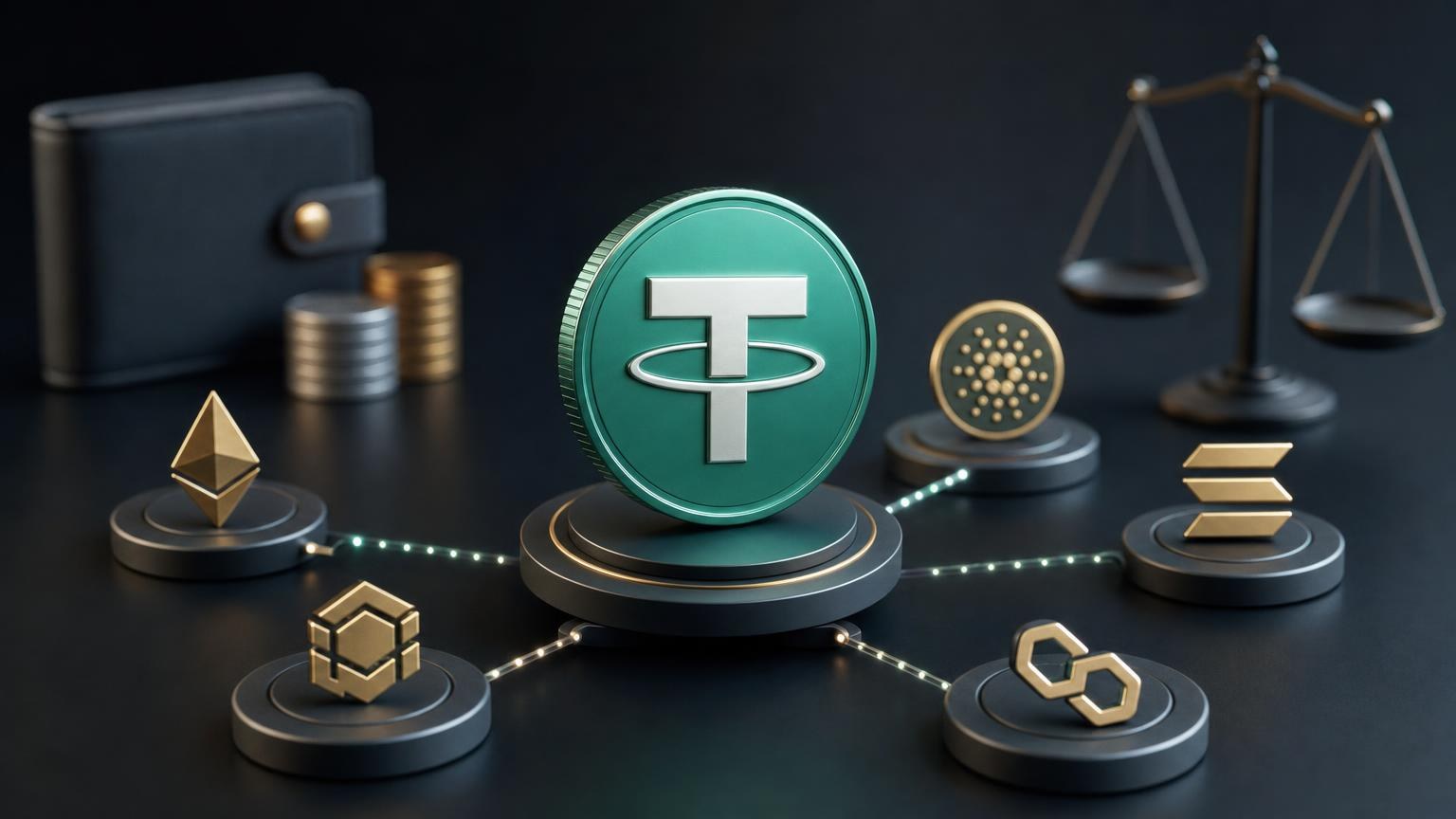
Use this term map before creating a USDT exchange order: identify the asset, match the sending and receiving networks, separate the blockchain cost from the exchange quote, and verify the final transaction by its TXID. This sequence explains why two transfers of the same USDT amount can produce different fees when they use different networks.
Essential USDT Fee Glossary
- USDT
- Exact meaning: a token designed to track the US dollar and issued on multiple supported blockchain protocols. In simple terms: USDT is the asset being transferred, while the selected blockchain supplies the transport system. Where it appears: exchange orders, wallet balances, deposit instructions, and blockchain explorers. Decision affected: you must select both USDT and a compatible network; the ticker alone is insufficient. Tether uses the native transaction system of each supported blockchain, so USDT transfers inherit the technical rules of the chosen protocol. [1]
- Blockchain network
- Exact meaning: the protocol that validates, records, and finalizes a transaction. In simple terms: it is the route along which USDT moves. Where it appears: network selectors, deposit instructions, wallet withdrawal screens, and explorer names. Decision affected: the network selected by the sender must be supported for the receiving address and exchange direction. Support can change, so current availability should be checked before every order. [2]
- Coin
- Exact meaning: the native asset of a blockchain, used according to that network’s protocol rules. In simple terms: a coin belongs to its own network, while USDT is carried as a token on that network. Where it appears: wallet balances and network-fee information. Decision affected: a self-custody wallet may require the network’s native coin or native resources to send USDT. For example, Ethereum transaction fees are paid in ETH, even when the transferred asset is an ERC-20 token rather than ETH itself. [3]
- Token
- Exact meaning: an asset represented through the rules or smart contracts of an existing blockchain. In simple terms: USDT can have the same name and intended unit of account on several networks without becoming one interchangeable on-chain record. Where it appears: token contract information, asset lists, and explorer transaction details. Decision affected: a USDT balance on one network cannot be treated as though it were already on another network; moving between networks requires a supported exchange, withdrawal route, or bridge operation.
- Address
- Exact meaning: the destination identifier to which a blockchain transaction is sent. In simple terms: it tells the network where the tokens should arrive. Where it appears: wallet receive screens, exchange deposit instructions, orders, and explorer records. Decision affected: check the full address and its stated network rather than relying on the first or last few characters. A syntactically accepted address does not by itself prove that the recipient supports the selected USDT network.
- Network fee
- Exact meaning: the protocol-level cost of processing and recording a transaction. In simple terms: it pays for blockchain resources rather than for USDT itself. Where it appears: wallet estimates, exchange withdrawal conditions, transaction receipts, and explorer data. Decision affected: networks calculate resource costs differently, and current demand can change the amount required. An exchange may reflect its expected payout transaction cost in the fee, rate, or total amount shown in the order; the exact pricing model depends on the provider.
- Gas
- Exact meaning: a measurement of computational work on Ethereum and compatible execution environments. In simple terms: gas measures the work; the gas fee is the payment for that work. Where it appears: Ethereum wallets, explorers, and transaction estimates. Decision affected: an ERC-20 USDT transfer interacts with a token contract and therefore consumes gas. On Ethereum, the final cost depends on gas used and the applicable fee per unit, including protocol and priority-fee components. [3]
- Liquidity
- Exact meaning: the amount of an asset that can be exchanged through a particular route without materially changing the executable price. In simple terms: it indicates how easily the provider can complete the selected direction and network combination. Where it appears: quoted rates, maximum available amounts, or temporary route restrictions. Decision affected: liquidity can differ by network and exchange direction, even though the displayed asset is USDT in each case. Current route availability must therefore be checked instead of assuming that every network or pair is supported.
- Slippage
- Exact meaning: the difference between an indicative price and the price actually executable when an order is processed. In simple terms: insufficient liquidity or market movement can change the conversion result. Where it appears: rate conditions and order summaries, if the provider uses a floating quote. Decision affected: distinguish slippage from the blockchain fee. Both may affect the received amount, but they have different causes.
- Confirmation
- Exact meaning: evidence that a transaction has been included in a block, followed by additional blocks or protocol-finality stages that strengthen settlement certainty. In simple terms: it shows that the network has started accepting the transfer into its history. Where it appears: blockchain explorers and deposit status pages. Decision affected: an exchange may wait for a route-specific confirmation threshold before crediting a deposit or advancing an order. Requirements vary by network, direction, and risk controls. Ethereum documentation distinguishes transaction inclusion from later justification and finalization. [4]
- TXID or transaction hash
- Exact meaning: the cryptographic identifier generated for a broadcast blockchain transaction. In simple terms: it is the lookup reference for one on-chain transfer. Where it appears: wallet history, exchange payout details, and blockchain explorers. Decision affected: use the TXID to verify the network, status, sender, recipient, token, and transferred amount. A TXID is not the same as an internal exchange order number. [4]
Connection Map: How the Network Changes the USDT Exchange Cost
USDT token → selected blockchain network → deposit or payout transaction → confirmations → explorer-verifiable result
- Object: the order specifies USDT as the asset and states an amount.
- Network or environment: the order assigns that USDT transfer to a particular blockchain. The network determines the transaction format, resource model, native fee asset, block processing, and confirmation method.
- Action: USDT is deposited to the exchange or sent from the exchange to the recipient. A provider processing a withdrawal must fund and broadcast an on-chain transaction under the chosen network’s rules.
- Confirmation: the network includes the transaction in its ledger. The exchange then applies its stated confirmation and compliance conditions before completing the relevant stage.
- Verifiable result: the TXID can be opened in an explorer for that specific network and compared with the expected address, token, amount, and status.
The selected network affects the quote because each blockchain meters transaction resources differently. Ethereum uses gas and a fee market influenced by network usage. TRON distinguishes Bandwidth for transaction data and Energy for smart-contract execution; unavailable resources may result in costs under that protocol’s model. Calling both systems simply “gas” hides a material technical difference. [3]
| Factor | What changes | What to check |
|---|---|---|
| Network fee mechanism | The blockchain calculates the resources needed to send the token under its own rules. | Current fee estimate and the native asset or resources used to pay it. |
| Network demand | Higher demand may raise the cost of obtaining timely inclusion on fee-market networks. | A current estimate shown immediately before signing or creating the order. |
| Payout transaction structure | A token transfer may require smart-contract execution rather than a simple native-coin transfer. | The selected token standard and network, not merely the USDT ticker. |
| Provider pricing method | The expected on-chain cost may be presented as a separate charge or incorporated into the quote. | The amount sent, total deductions, rate type, and expected amount received. |
| Route liquidity | Availability and executable pricing can differ across network-specific reserves or conversion routes. | Whether the exact asset, network, amount, and direction are currently available. |
| Order size | A largely fixed withdrawal cost represents a greater percentage of a small transfer than of a larger one. | Both the absolute deduction and its proportion of the amount. |
| Confirmation policy | The number or type of confirmations required can affect when processing continues, although it is not itself a blockchain fee. | The current order conditions and deposit status. |
Do Not Confuse These Terms
USDT asset and USDT network
The asset is the token being exchanged. The network is the blockchain version and transport route used for the transfer. Choosing USDT correctly but selecting an unsupported network can prevent automatic crediting and may lead to loss or a difficult recovery process. Never infer network compatibility from the ticker alone.
Coin and token
A native coin operates as part of its blockchain’s base protocol; a token uses that blockchain’s token infrastructure. The practical consequence is that holding USDT may not be sufficient to send it from a self-custody wallet. Depending on the network, the wallet may also need the native coin or allocated network resources to cover the transaction.
Network fee and exchange fee
The network fee is tied to blockchain processing. The exchange fee, spread, or quoted deduction is set under the provider’s order terms and may account for more than the raw on-chain transaction. Comparing only an explorer’s network fee with the total difference between sent and received amounts can therefore produce a misleading conclusion. Read the quote to determine which components are disclosed separately.
Gas and every blockchain charge
Gas is accurate terminology for Ethereum-style computation, but it is not a universal name for every network resource. TRON, for example, documents Bandwidth and Energy as separate resource categories. The practical consequence is that instructions written for one network should not be applied mechanically to another. [3]
Transaction and exchange order
An exchange order records the requested conversion and its conditions. A blockchain transaction records a deposit, payout, or other on-chain action. One order may involve more than one operational step, while an order created but not yet funded may have no deposit TXID. Use the order identifier when discussing order status and the TXID when verifying a blockchain transfer.
Confirmation and completion
A confirmed deposit proves progress on the blockchain; it does not automatically prove that the entire exchange order is complete. The provider may still need to match the payment, apply the stated confirmation threshold, perform compliance checks, or send the payout. Verification requirements depend on the operation direction and the results of applicable compliance procedures, so current conditions should be reviewed before creating an order.
Private key and address
An address is intended to receive assets and can be shared for that purpose. A private key or seed phrase controls the wallet and must not be disclosed to an exchanger, support agent, or person offering to “verify” a transaction. Confusing these items creates a direct theft risk. A legitimate blockchain status check uses an address or TXID, not wallet recovery secrets.
Practical Example: Comparing Two USDT Routes
Assume a user wants to exchange one supported asset for USDT. The order page presents more than one currently available USDT network, each with its own quote. No fictional fee is needed to compare them: record the input amount, expected USDT payout, selected network, address requirements, rate conditions, and any displayed deduction for each route.
Before using the available USDT exchange direction, the user should confirm that the receiving wallet supports the exact network named in the order. The service supports USDT and several other crypto assets, while new assets are added gradually, but this does not mean that every pair, blockchain, or direction is available at all times.
| Check | Route A | Route B |
|---|---|---|
| Exact network name | Copy from the current order conditions | Copy from the current order conditions |
| Wallet support | Confirmed or not confirmed | Confirmed or not confirmed |
| Expected USDT received | Use the live quote | Use the live quote |
| Fee presentation | Separate charge or included in quote | Separate charge or included in quote |
| Rate type | Check whether conditions describe a fixed or floating result | Check whether conditions describe a fixed or floating result |
| Additional identifier | Check whether the recipient explicitly requires a Memo or Tag | Check whether the recipient explicitly requires a Memo or Tag |
| Confirmation conditions | Read current requirements | Read current requirements |
The cheaper-looking network is suitable only if both sides support it. A lower displayed deduction cannot compensate for an incompatible destination. If the wallet supports only Route A, selecting Route B because its quote appears more attractive creates a network mismatch rather than a saving.
How to Recognize the Terms in a Wallet, Order, or Explorer
- In documentation: look for the exact blockchain name, token standard, native fee asset or resource model, deposit rules, and required confirmation policy. Treat supported-network lists as dynamic information and verify them at the time of the operation.
- In a wallet: identify the active account or network before copying the receiving address. Review the asset and network together. If the wallet estimates a transaction charge, note which native coin or resource is used to pay it.
- In an exchange order: compare the send amount, receive amount, network, address, quote conditions, and any separately disclosed fee. Do not assume that an asset shown as supported is available through every network.
- In an explorer: search using the TXID on the explorer corresponding to the selected network. Verify status, token, amount, sender, recipient, and block information. A result on the wrong explorer may be absent because blockchain databases are separate.
- For a Memo or Tag: use one only when the receiving service explicitly supplies it for the selected network. Do not invent, omit, or reuse an identifier from another deposit instruction.
- For security: never enter a seed phrase or private key to check a fee, trace a TXID, receive support, or recover an exchange order. Check the domain and order details carefully to reduce phishing risk.
Pre-Exchange Checklist
- Confirm that the exact USDT exchange direction is currently available.
- Write down the full network name shown by the exchange.
- Verify that the receiving platform accepts USDT on that same network.
- Check whether the destination requires a Memo, Tag, or another supplied identifier.
- Compare the expected amount received, not only the fee label.
- Determine whether the quote is fixed under stated conditions or may change with the market.
- Review current network estimates because on-chain costs can change with demand.
- Check the full address and avoid copying it from an untrusted message or advertisement.
- Review confirmation and compliance requirements before sending funds.
- After broadcast, save the order identifier and TXID separately.
- Use the correct blockchain explorer to verify the transaction.
- Remember that blockchain transactions are generally not designed for simple cancellation after valid broadcast; a wrong address or incompatible network may cause irreversible loss.
Conclusion
A USDT exchange fee depends on the selected network because USDT is a token carried by multiple blockchain systems rather than a single universal payment rail. Each network applies its own resource model, demand conditions, native fee mechanism, transaction structure, and confirmation process. The exchange may then incorporate the expected payout cost and route liquidity into its displayed fee or conversion quote.
The useful comparison is therefore not “USDT versus USDT.” It is one complete route versus another: asset + network + destination support + quoted result + confirmation conditions. Verify those elements before creating the order, then use the network-specific TXID to check what actually happened on-chain.

CONGRAGRULATIONS TO OUR LUCKY DRAW WINNER

 The long wait is over , We will contact you when the prize arrive




LONG SERVICE AWARDS 5YEARS 10YEARS 15YEARS
We honor the dedicated hearts and steadfast spirits of our awarded members. Your commitment has shaped the very essence of our journey, growing with us through every challenge and triumph.
We extend our deepest gratitude for the years you’ve dedicated, the milestones we’ve reached together and the unwavering support that has been the cornerstone of our success.
This is appreciation goes beyond words-it’s etched in legacy of our shared achievements.
Here’s to the memories we’ve crafted and the future we’ll forge together. With heartfelt thanks, we celebrate you.
-

- MAHSURI BINTI ZAMHARI (19 YEARS)
-

- STEPHANIE SOON FUNG TZE (18 YEARS)
-

- STELLA YONG SIEW LANG (15 YEARS)
-

- WONG LIANG TZSE (13 YEARS)
-

- FARLINA AWING TOM (13 YEARS)
-

- SUNG SOON HOO (13 YEARS)
-

- ALVIN YII XIONG HAO (12 YEARS)
-

- AMALINA BINTI HAMDAN (11 YEARS)
-

- JONG JIEW HIN (10 YEARS)
-

- TING SING YE (9 YEARS)
-

- ELSIE SUSAN TIONG YIEN YIEN (9 YEARS)
-

- NOOR IRENE BINTI NGALI (9 YEARS)
-

- NUR HIDAYAH BINTI SHAMSUDDIN (8 YEARS)
-

- FIRDAUS BIN ASA’ARI (8 YEARS)
-

- TING CHENG SIAK (7 YEARS)
-

- DAPHNE LING SIE WEN (7 YEARS)
-

- MARINA LENYA AK ROBERT JUNDA (7 YEARS)
-

- DAYANG NOOR ZIELA BINTI ABG DANIEL (7 YEARS)
-

- WONG EE PING (7 YEARS)
-

- MOHAMMAD NAZZIR BIN NASIR (7 YEARS)
-

- ROSNI ANAK JEMAT (6 YEARS)
-

- MELISSA PAWAK ANAK AKAU (6 YEARS)
-

- FREDDY HOUSTON ABAK BOSCO (6 YEARS)
-

- TINA LAW HUI TING (6 YEARS)
-

- AUGUSTINE ANAK ABANG (6 YEARS)
-

- STEPHANIE AISAH ANAK EGAN (5 YEARS)
-

- NUR SHAHIDA ATIQAH BINTI ALI (5 YEARS)
-

- NURFADHILAH BINTI SARBINI (5 YEARS)
-

- RICHARD LING LEE KUM (5 YEARS)

PERFECT VISION 20TH ANNIVERSARY EST 2003
Two decades of shared dreams, challenges overcome and triumphs celebrated. Together, we’ve turned ambitions into achievements and colleagues into a close-knit family. Here’s to 20 years of unwavering dedication, relentless pursuit of excellent and countless memories made. Let’s continue to shape the future with the same passion that has brought us this far. Happy 20th anniversary to us all!! #20YearsStrong #CorporateJournery #AnniversaryCelebration




?Everything 50% Off x LUCKY DRAW?
See the beauty of #RAYA and the world around you with clear vision and #Great#Deals and a chance to ⬇️⬇️
#WIN #BIG for Our #20th #Anniversary ‼️
?#Everything 50% Off x LUCKY DRAW?
?#Everything 50% Off x LUCKY DRAW?
?#Everything 50% Off x LUCKY DRAW?
Grand Prize ➡️ #Perodua #Beaza ?
2nd Prize ➡️ #Samsung 55” TV ?
3rd Prize ➡️ #Media Fridge ?
4th Prize ➡️#Media Washing Machine ?
5th Prize ➡️ #Media Air cond ?
?And also consolation prizes with Total Prize worth of #RM48312.00?
What are you waiting for❓❓
Visit Your Nearest Perfect Vision NOW ‼️‼️
We provide
✅ FREE Eyetest
✅ FREE Adjustment
✅ FREE Trying
✅ FREE Ultra-Sonic Washing
✅ FREE Nosepad Replacement
Our Operation Hours ⬇️
? Monday – Sunday
⏰ 0900am – 0900pm
⏰ 1000am – 0900pm












INCENTIVE GAMES
#congratulations Making the impossible , #Possible
????
INCENTIVE GAME WON
CASH RM10420 ??
#teamwork#nothingisimpossible


EXTRA Vaccination Discount For Kids


 Stephanie http://wa.me/60138500134Augustine http://wa.me/0138399776
❤️ 18th Anniversary Lucky Draw ❤️
18th Anniversary Lucky Draw 

 Stephanie http://wa.me/60138500134